MAKING OF / Where Rabbits Come From
Inside the making of the rabbits.
How did Where Rabbits Come From come to life? Explore the drawings, movements and sounds that shaped the film, from the screenplay to its encounters with audiences.
Explore the process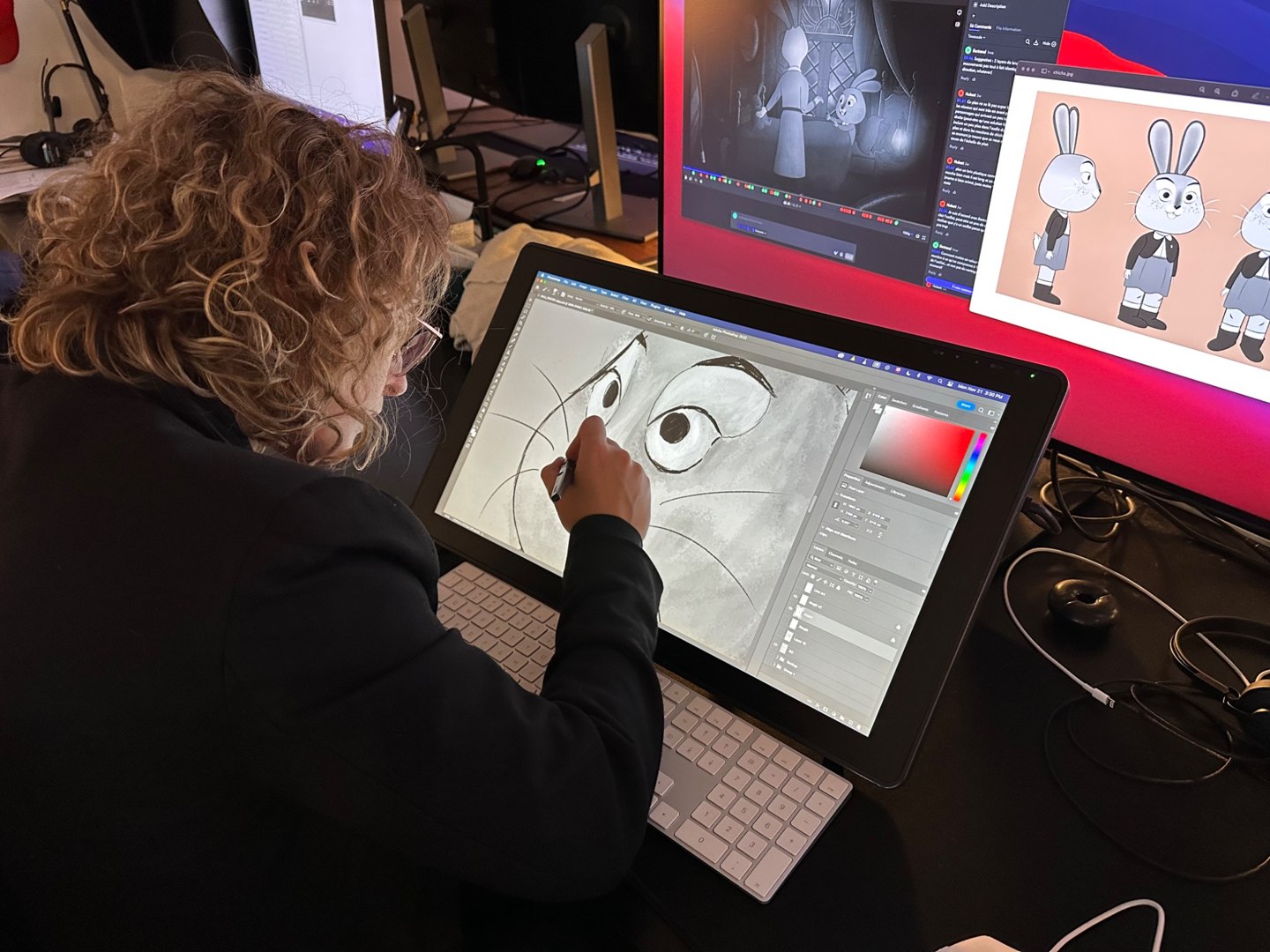
Imagine
The story takes shape.
From words to the first shots: building a world and finding the rhythm of the story.
STAGE 01 · Screenplay
It starts with a relationship.
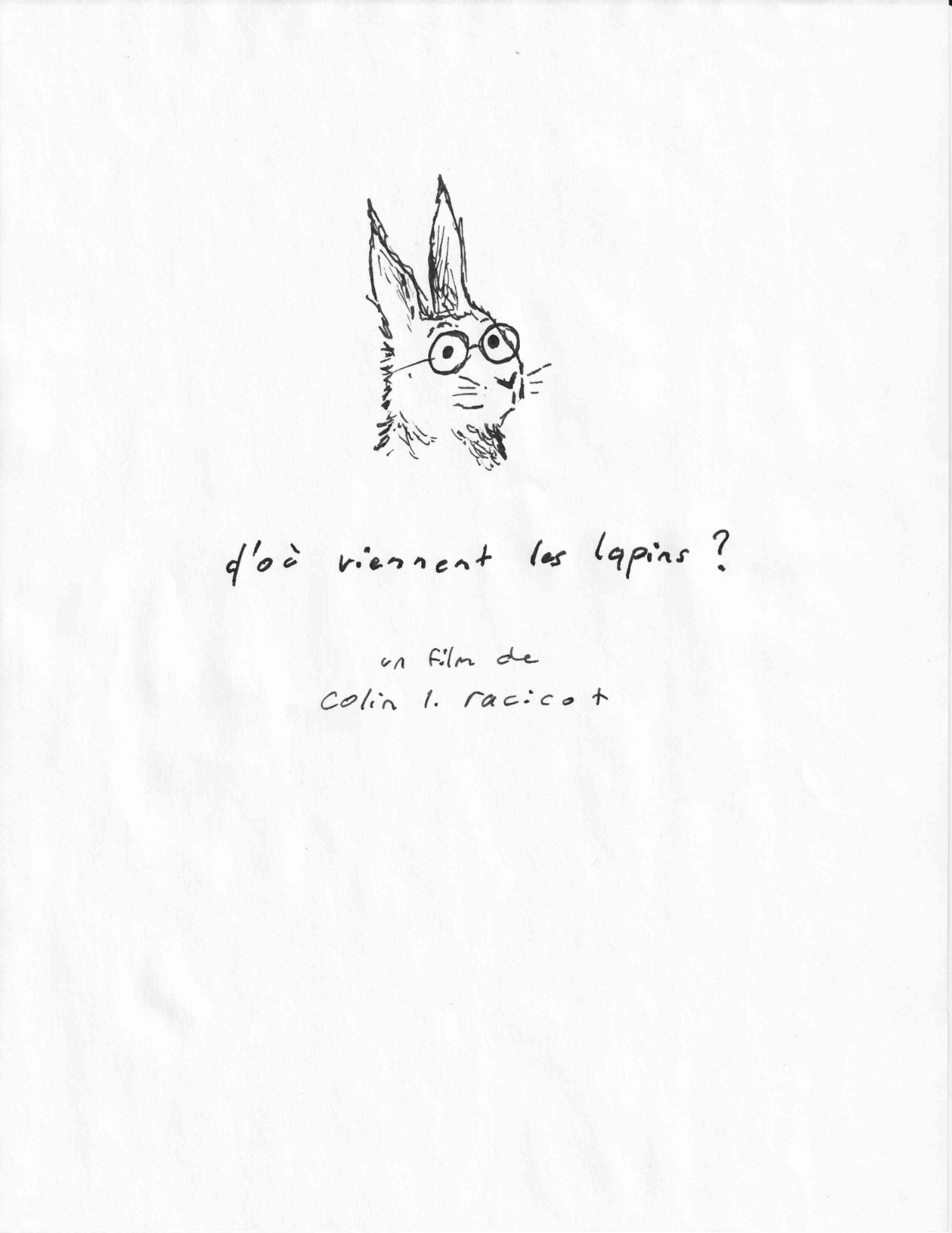
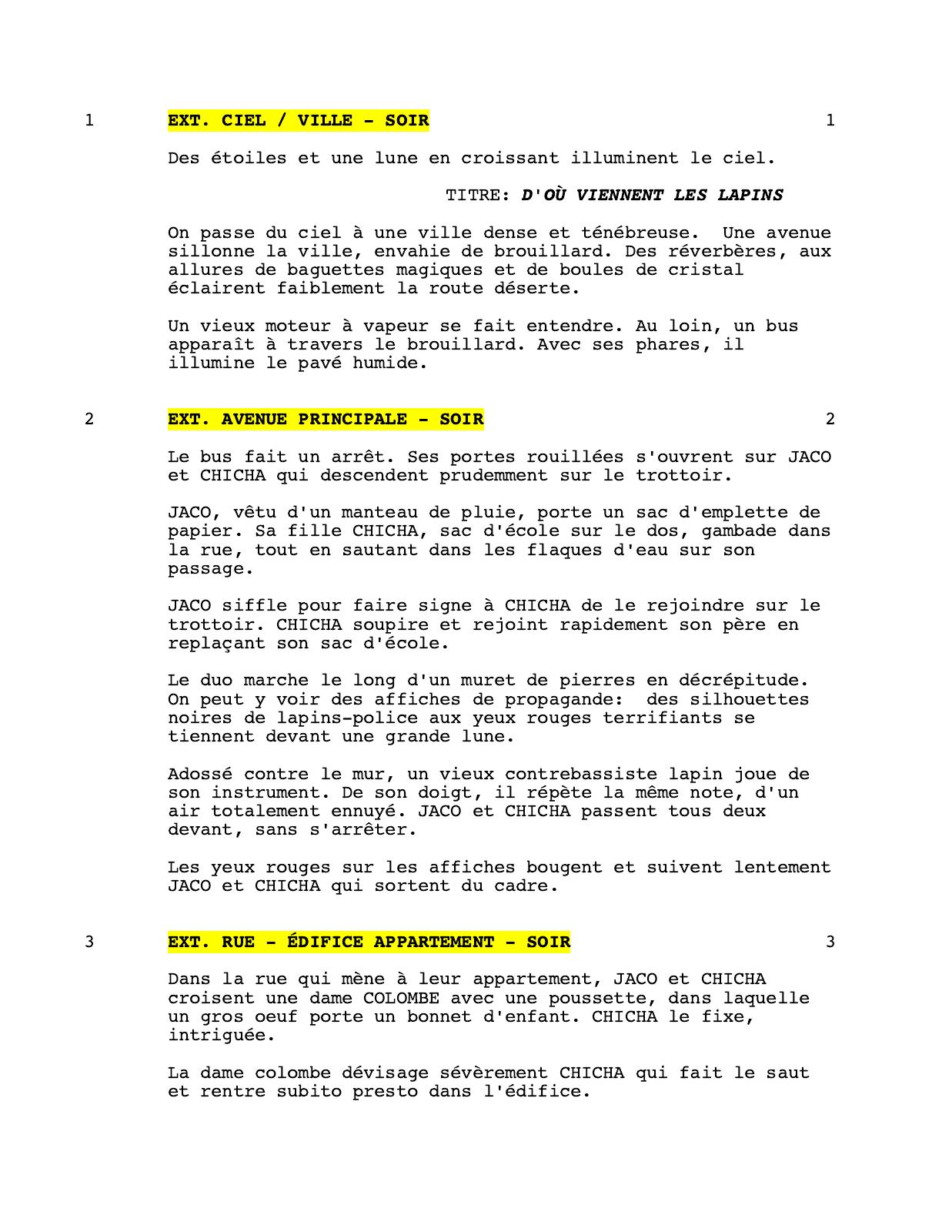
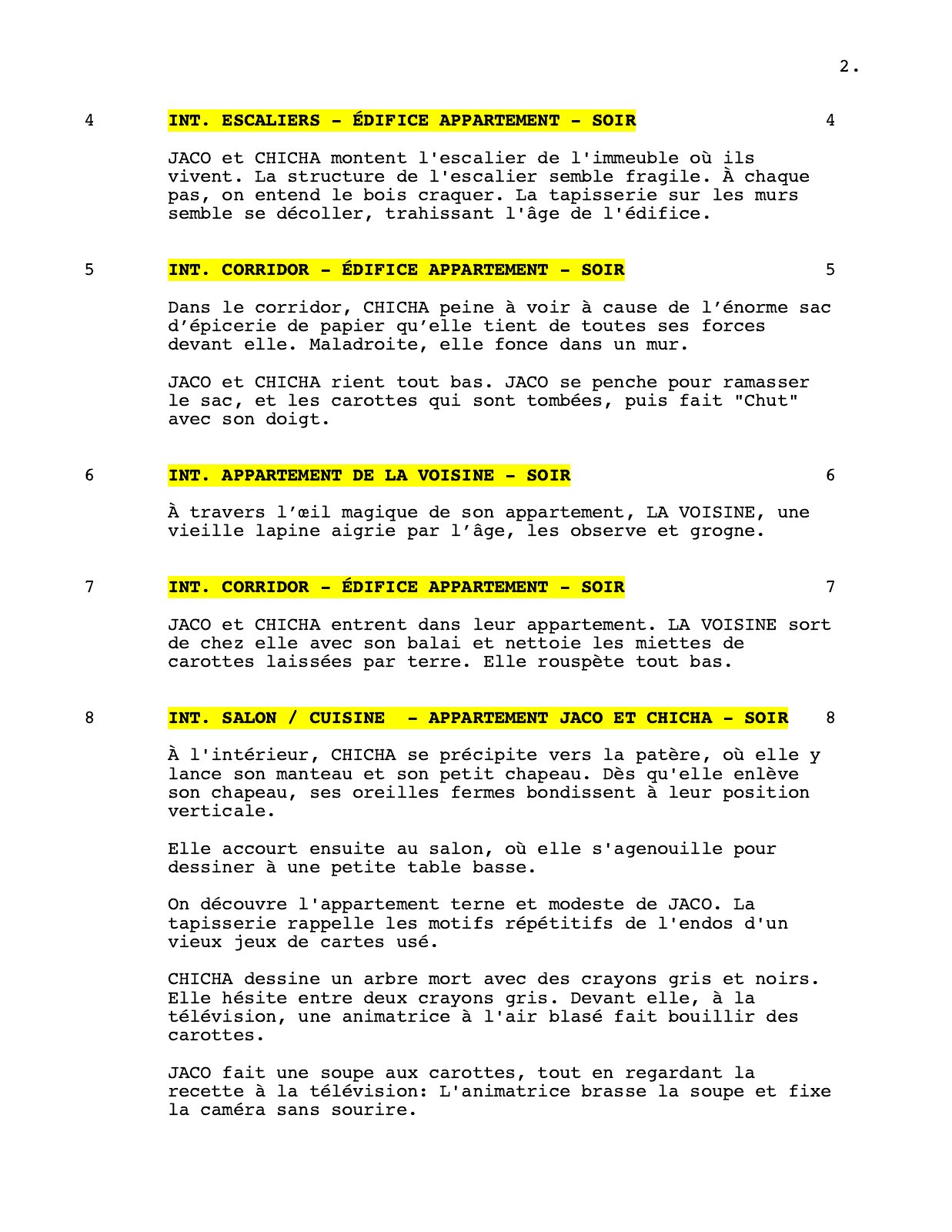
Jaco, a father, and Chicha, his daughter: the screenplay builds their relationship through situations, gestures and a visual world. Before the drawings, the words are already searching for emotion.
Colin Ludvic Racicot wrote the film with support from Marilise Aubry. The first two pages introduce a dark city and a daily life in which the child’s curiosity contrasts with her father’s concerns.
- Screenplay
- Colin Ludvic Racicot
- Screenwriting support
- Marilise Aubry
STAGE 02 · Storyboard & animatic
Drawing the shots. Finding the rhythm.
The storyboard turns the screenplay into framing and action. Colin Ludvic Racicot chooses what the camera shows, from what distance, and in what order.
The animatic assembles those drawings into an initial edit. It lets the team explore the length of a glance, a transition or a silence before animating the shots.
- Storyboard and animatic
- Colin Ludvic Racicot
With support from Toon Boom AnimationSponsor · Storyboard Pro
The video could not load. Open the video directly
Create the image
Drawing becomes cinema.
Animating, shaping the light and bringing the shots together as one film.
STAGE 03 · Animation
Giving movement an intention.
Working with Bonjam and the film’s artists, the team mainly used 2D digital puppets, also known as cutout animation. Each character is made of drawn pieces that can be articulated and deformed to build a performance. One sequence also uses traditional 2D animation, drawing by drawing. The sensitivity of Studio Ghibli and the graphic character acting of The Triplets of Belleville and The Illusionist informed the film’s visual exploration.
Posing establishes the key attitudes. Animation gives them rhythm, weight and reactions. Compare the two versions of the same shot.
- Animation collaboration
- Bonjam and the film’s artists
With support from Toon Boom AnimationSponsor · Harmony
From posing to movement
Drag to compareThe video comparison could not load.
Shot 067 · about 4 seconds · silent. Drag the vertical divider while both versions loop in sync to see how key poses become a complete performance.
STAGE 04 · Compositing
Staging the light.
In After Effects, animated characters, backgrounds and effects are assembled into one image. Shadows, light and atmosphere give a shot depth and guide our attention.
The movement stays the same between these versions. What changes is how we see it: compositing gives the image its atmosphere and coherence.
Creative tool Adobe After Effects
From animation to the final image
Drag to compareThe video comparison could not load.
The same shot before and after compositing. Drag the vertical divider while both versions loop in sync to compare the lighting, depth and final atmosphere.
STAGE 05 · Editing & colour
Bringing the shots into harmony.
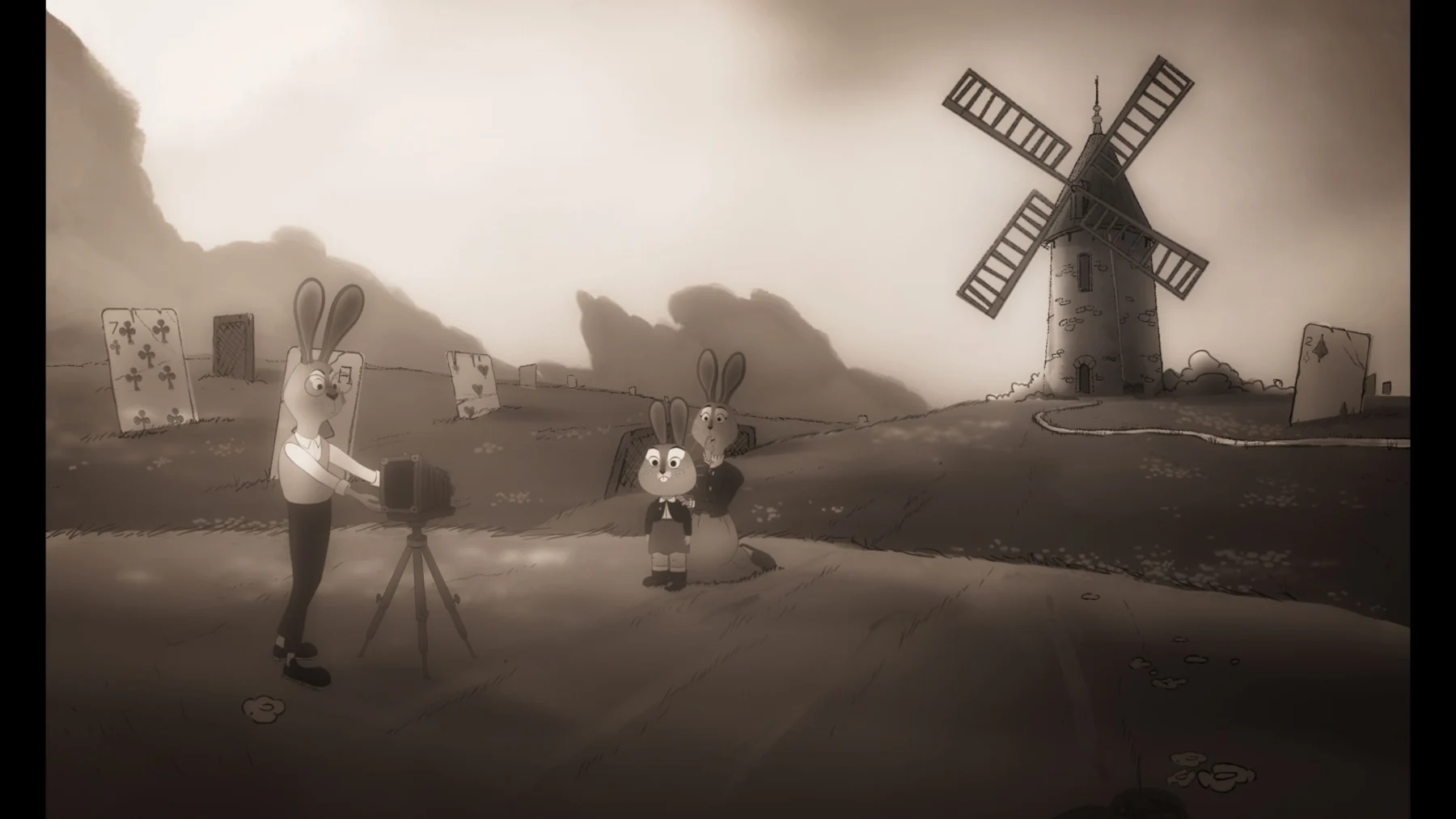
With Outpost, editing and colour grading bring the picture towards its final form. Editing refines durations and transitions to find the film’s breathing rhythm.
Colour grading harmonizes contrast, density and tonal nuances across shots. A scene needs to feel consistent while keeping its characters readable and its atmosphere intact.
- Editing and colour grading
- Outpost
Create the sound
A whole world to hear.
Voices, Foley, atmospheres and music develop in dialogue with the picture, before coming together in the final mix.
STAGE 06 · Voices
A presence, even without dialogue.
A voice can tell us a great deal without dialogue. Breaths, reactions and vocal intentions give characters a physical presence and an emotional life.
Sophie Cadieux and Éric Paulhus lend their voices to the film. This short recording captures a moment in the voice session with Sophie Cadieux.
- Voices
- Sophie Cadieux and Éric Paulhus
The video could not load. Open the video directly
STAGE 07 · Foley
Making gestures audible.
A drawn character makes no sound on its own. Foley recreates actions in sync with the picture: footsteps, rustling materials and objects being handled.
Watching the projection, the performer finds a material and a movement that respond to the action. These sounds are performed and recorded to give animated gestures weight.
The video could not load. Open the video directly
STAGE 08 · Sound design
Imagining what we cannot see.
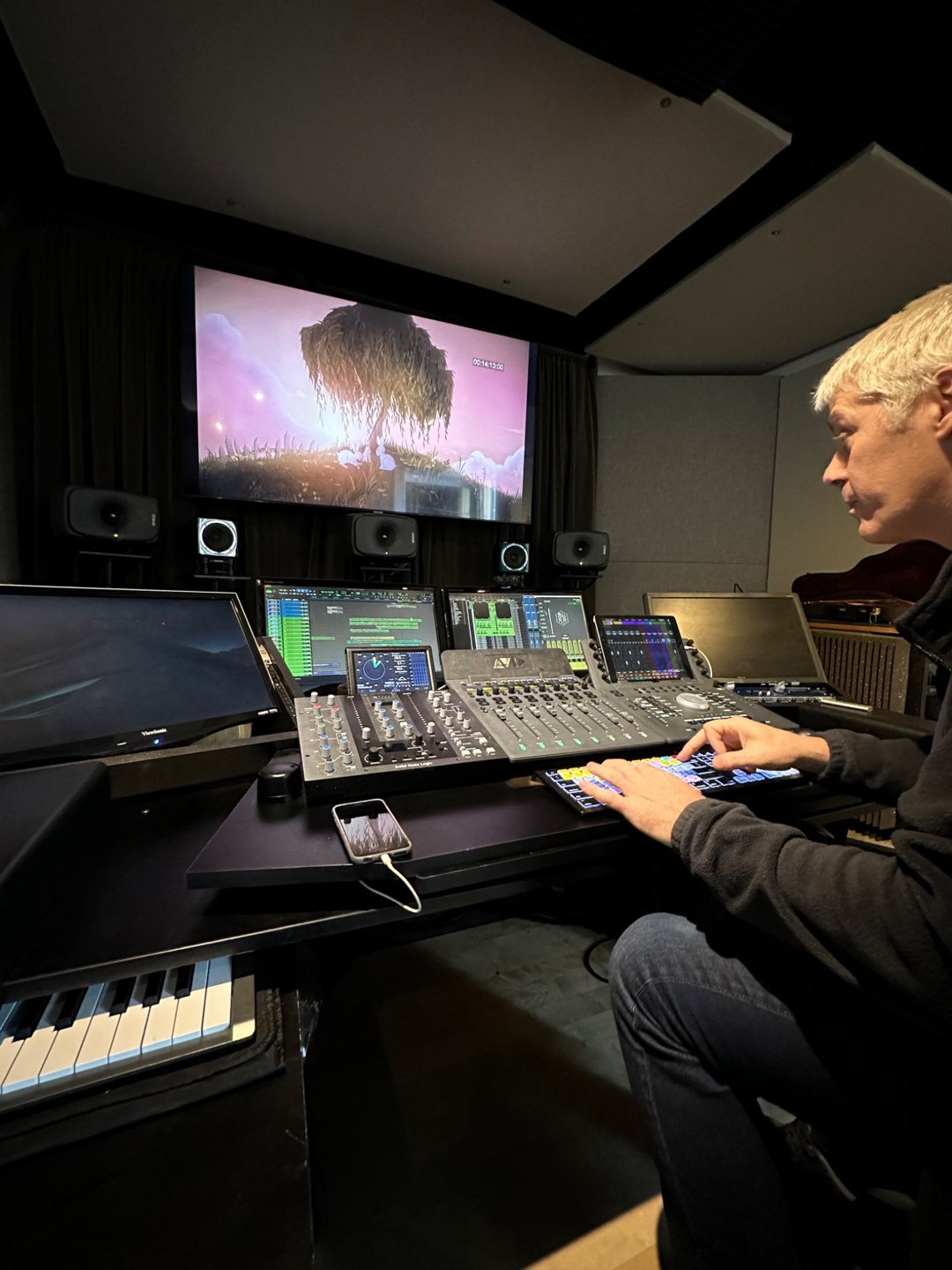
Sound design creates an environment around the characters. Atmospheres, effects and silences suggest places, distances and events outside the frame.
Pierre Yves Drapeau and Alejandro Magaña Martinez build this sonic world. In dialogue with the story and image, sound can make a place feel safe, strange or threatening, and shift our attention.
- Sound design
- Pierre Yves Drapeau and Alejandro Magaña Martinez
STAGE 09 · Music
The score becomes a shared performance.
Benoît Charest composed the film’s music, recorded with a small chamber orchestra. Instrumental colours and musical phrases accompany the story without explaining everything.
In the studio, the score becomes a collective performance. A cue, the attack of a bow, a breath: the musicians’ gestures give the music its presence.
- Original score
- Benoît Charest
- Performance
- A small chamber orchestra
The video could not load. Open the video directly
STAGE 10 · Final mix
Bringing the sounds together.
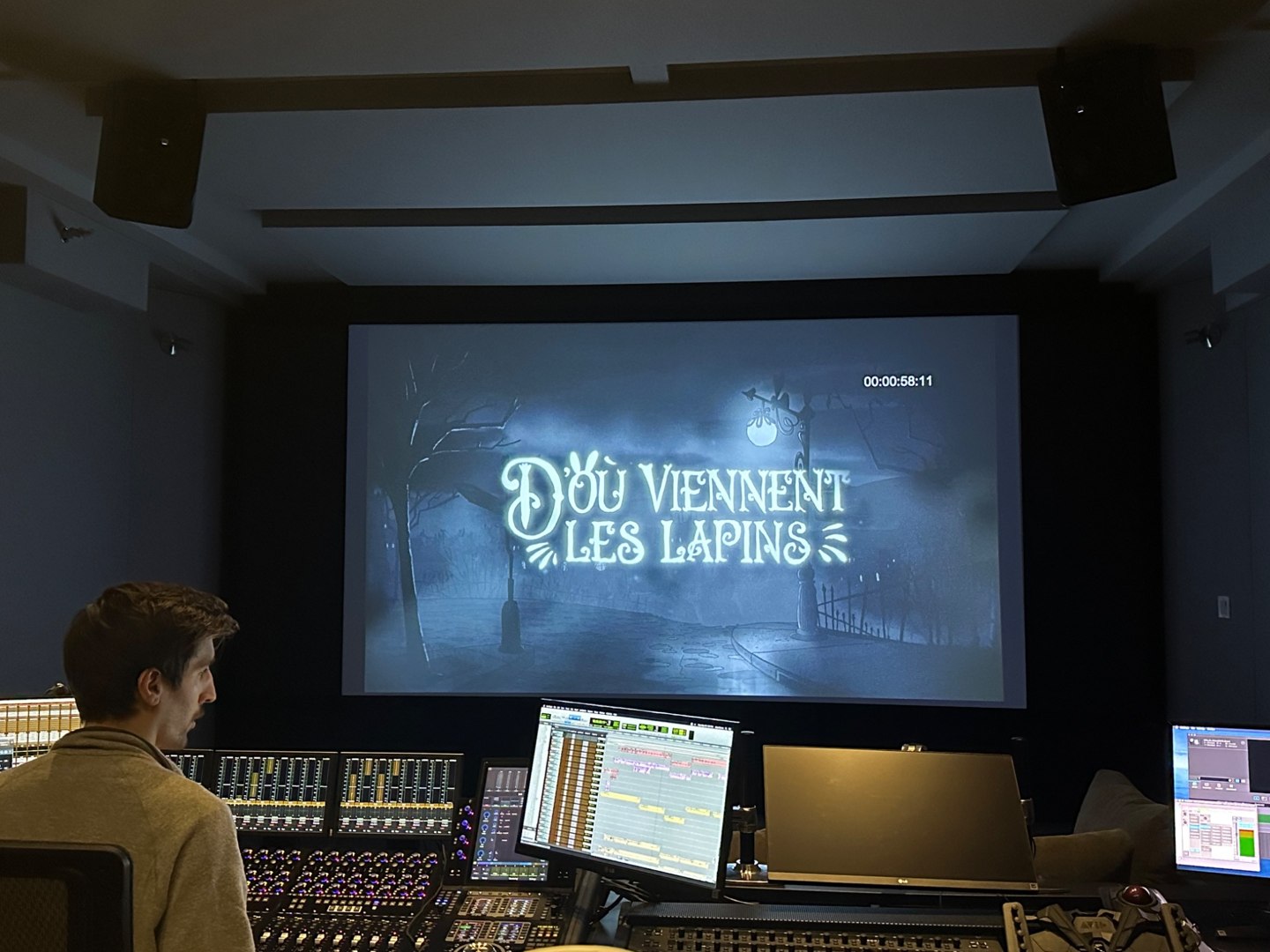
Mixing brings together voices, Foley, sound design and music. It adjusts their position, level and dynamics to guide our listening while preserving the richness of each contribution.
Joey Simas mixed the film at Premium Films. In the mixing theatre, picture and sound are experienced together: a detail can become subtle, music can make room for a gesture, and an atmosphere can surround the audience.
- Mixing
- Joey Simas
- Mixing studio
- Premium Films
Meet the audience
A film, new connections.
The creative journey continues in cinemas and in conversations with audiences.
STAGE 11 · Distribution
Meeting the audience.
Distributed by H264, Where Rabbits Come From has met audiences at the Sommets du cinéma d’animation, Zlín, Fantasia and Vancouver, among other festivals. It won Best Animated Short at the Canadian Screen Awards in 2024.
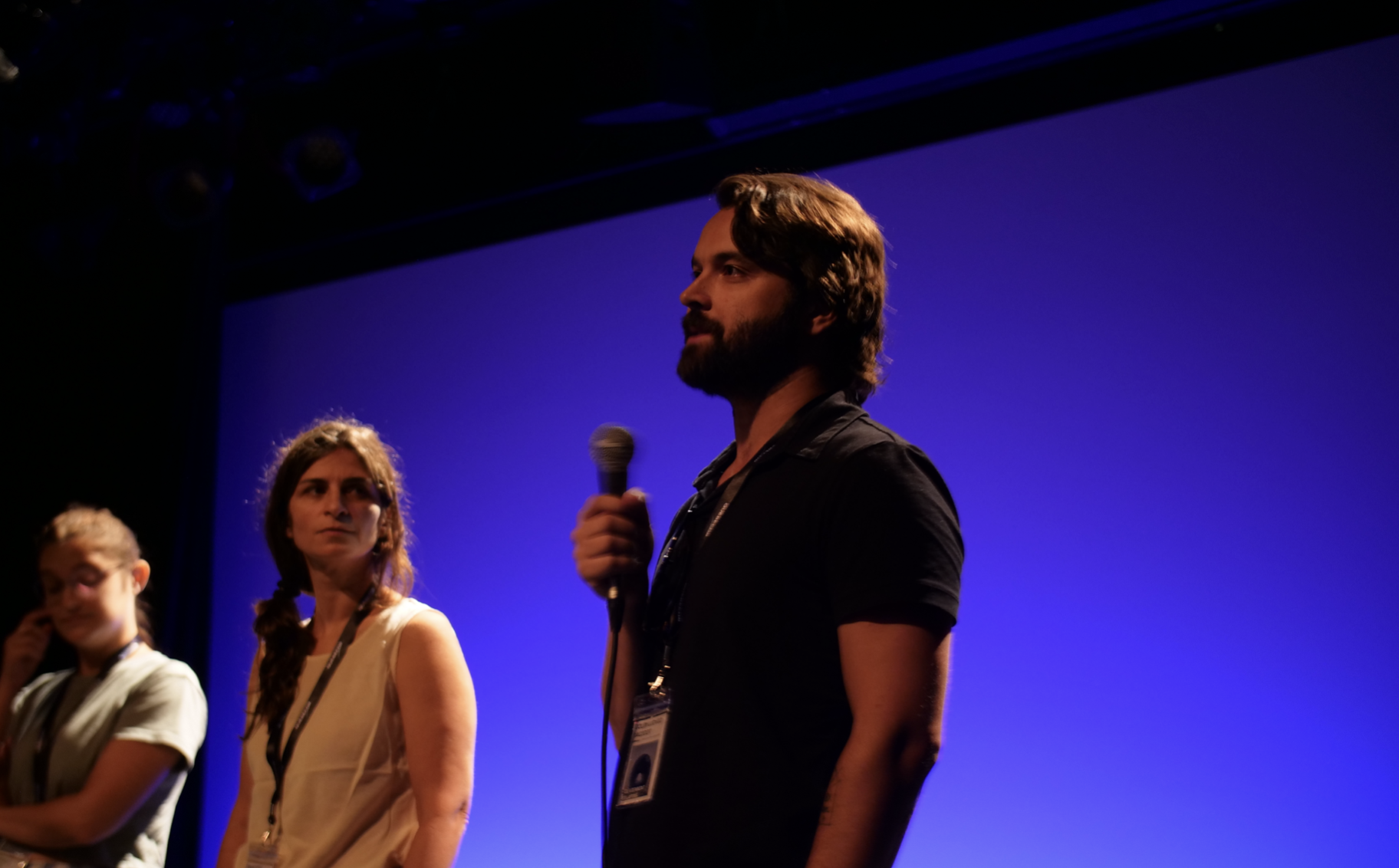
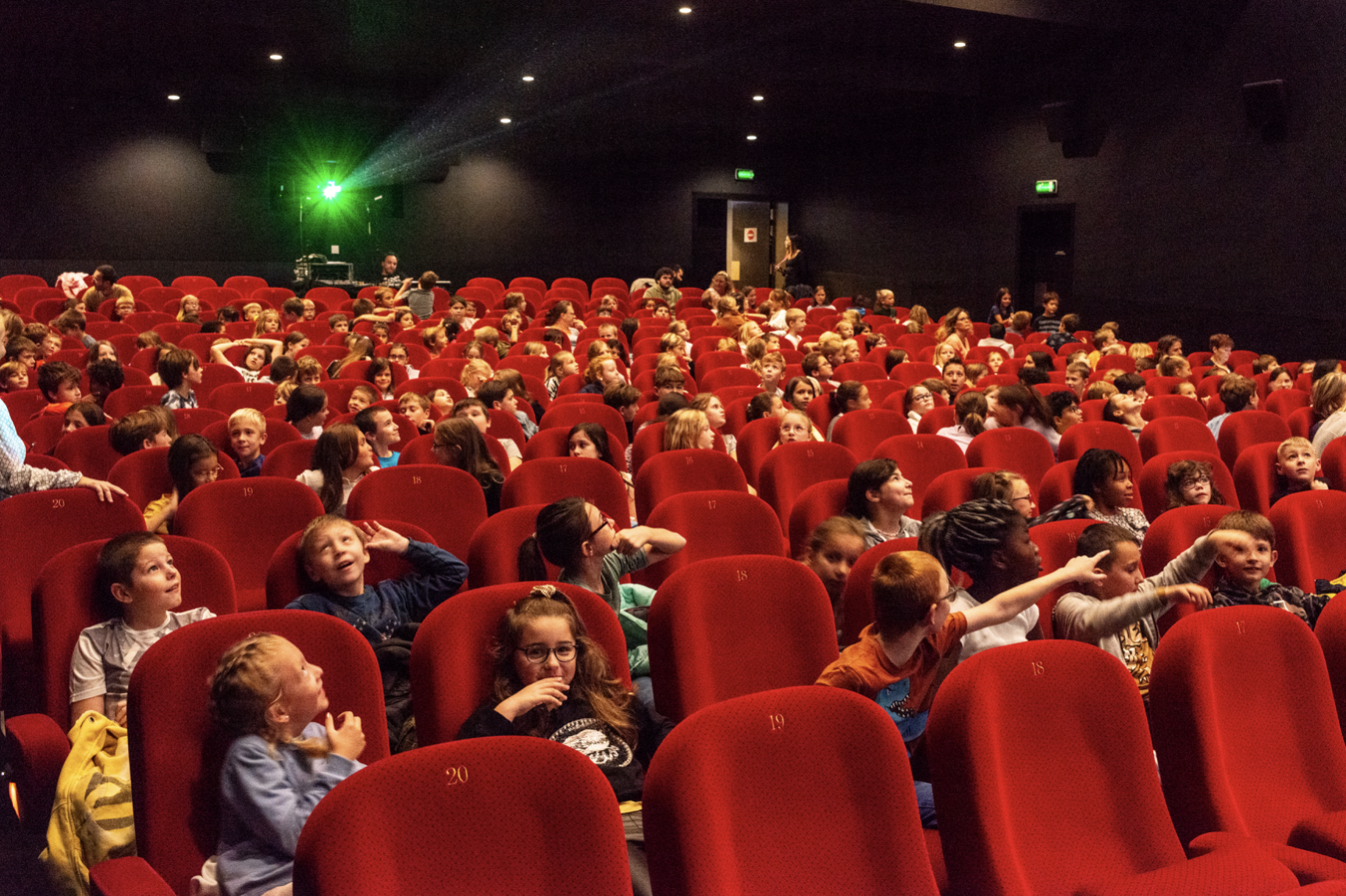
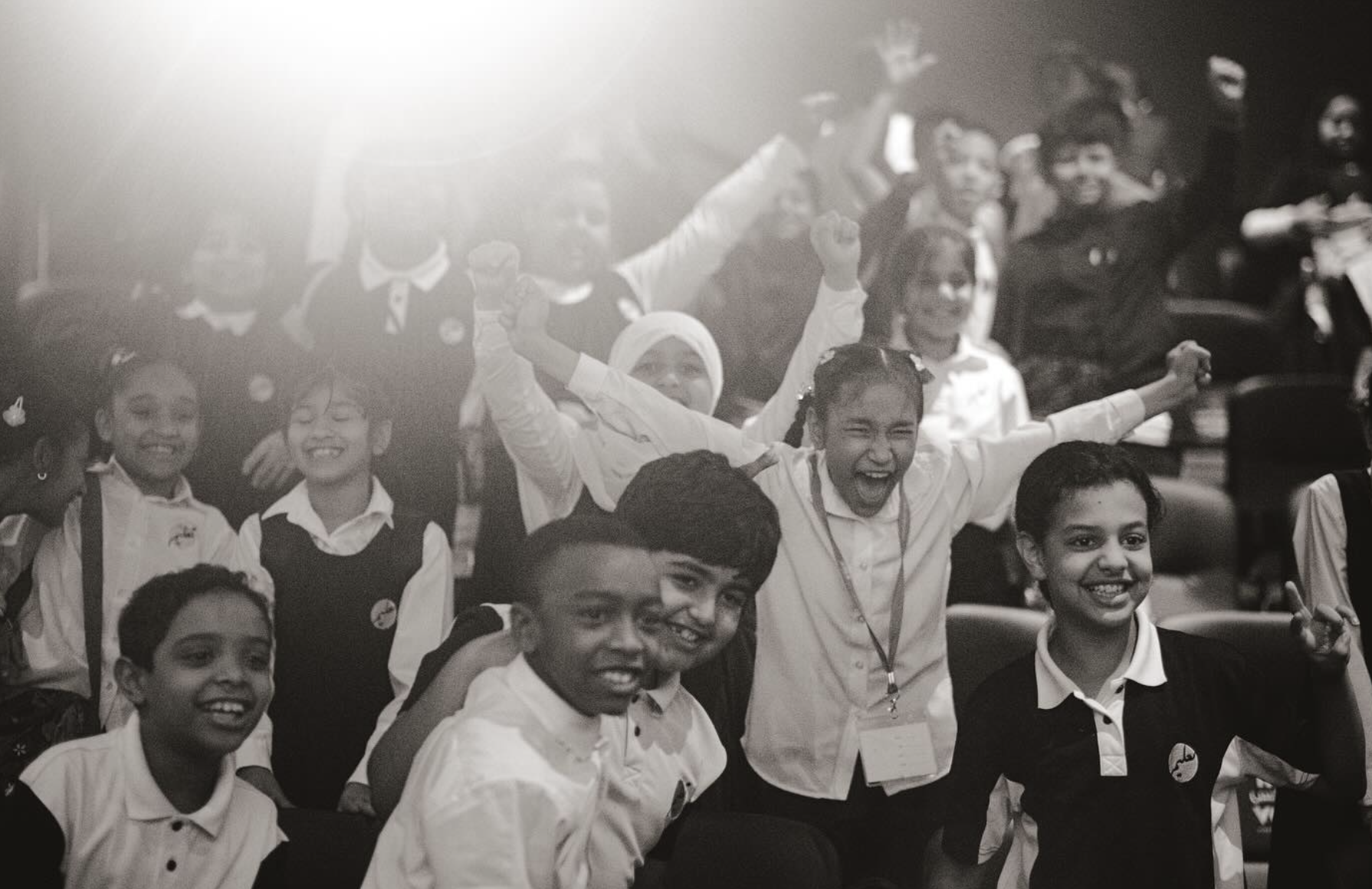
The film was also screened at FIFF Namur (Campus), then in Sharjah, in the United Arab Emirates, where the director met and talked with school audiences. Screenings also open a dialogue. Bringing a Québec film to audiences at home and internationally means sharing its story with people from many different backgrounds.
- Distribution
- H264